Does Clear Window Tint Actually Block Heat?
When most Central Florida drivers picture heat-blocking window tint, they imagine very dark glass. Usually, something like a 5% limo tint comes to mind. However, the darkness of a window film does not necessarily determine how much heat it can reject.
With recent advancements in technology, 3M window films can remain virtually clear while still significantly reducing the solar heat from entering your vehicle, home or business.
At Pro Tint of Orlando, we regularly recommend lighter ceramic window films to customers who want a cooler, more comfortable interior without noticeably changing the appearance of their vehicle.
3M Crystalline and 3M Ceramic IR window films are especially popular for the front auto glass, where maintaining visibility is a priority.
How Can Clear Window Tint Reject Heat?
Sunlight is made up of several forms of energy, including visible light, ultraviolet radiation (UV) and infrared rays (IR). Traditional dyed or carbon films work by reducing the amount of visible light that passes through the glass. This has an added effect of reducing glare as well.
Carbon and dyed window tint rejects a good amount of UV rays as well, but those are only responsible for about 7% of solar energy.
Most of the heat we feel from the sun comes through as infrared radiation (IR), followed by visible light, and then finally ultraviolet rays (UV). See below:
“According to the UCAR COMET Program, about 43% of radiant energy from the sun is in the visible part of the spectrum.“
Source: National Oceanic and Atmospheric Administration (NOAA): ClimateBits, Solar Radiation
More advanced ceramic films use specialized technology to target heat-producing infrared energy without blocking as much visible light. The nano-ceramic particles within the film are primarily responsible for rejecting the heat we feel from the sun.
In short, a window film does not need to look dark to perform well. A high-quality, virtually clear 3M ceramic tint can reject more heat than most dyed or carbon films at darker shades like 5% or 15%.
3M™ Automotive Window Film Crystalline Series is one of the best examples. According to 3M, Crystalline can reject up to 64% of total solar energy and up to 99% of heat-producing infrared rays.
It uses a proprietary multi-layer optical film containing more than 200 extremely thin layers, allowing it to deliver industry-leading levels of IR rejection without noticeably darkening the vehicle’s glass. Even at a virtually clear 70% VLT, 3M Crystalline still rejects up to 97% of heat-producing infrared rays and up to 99.9% of ultraviolet (UV) radiation.
What About 3M Ceramic IR?
3M™ Automotive Window Film Ceramic IR Series is another excellent option for Orlando and Winter Park vehicle owners. Its nano-ceramic technology can reject up to 66% of total solar energy and provide up to 95% infrared rejection, depending on the film shade and glass configuration.
3M Ceramic IR is also non-metalized, which means it will not interfere with GPS, satellite radio, or cellular signals like 4G / 5G.
At Pro Tint of Orlando, 3M Ceramic IR is available in multiple shades, including lighter options that preserve excellent outward visibility.
We offer film choices ranging from clear 70% ceramic film to 5% limo tint, allowing Orange County, FL drivers to balance heat rejection, privacy, glare reduction and appearance.
Is Clear Tint Worth Installing on a Windshield?
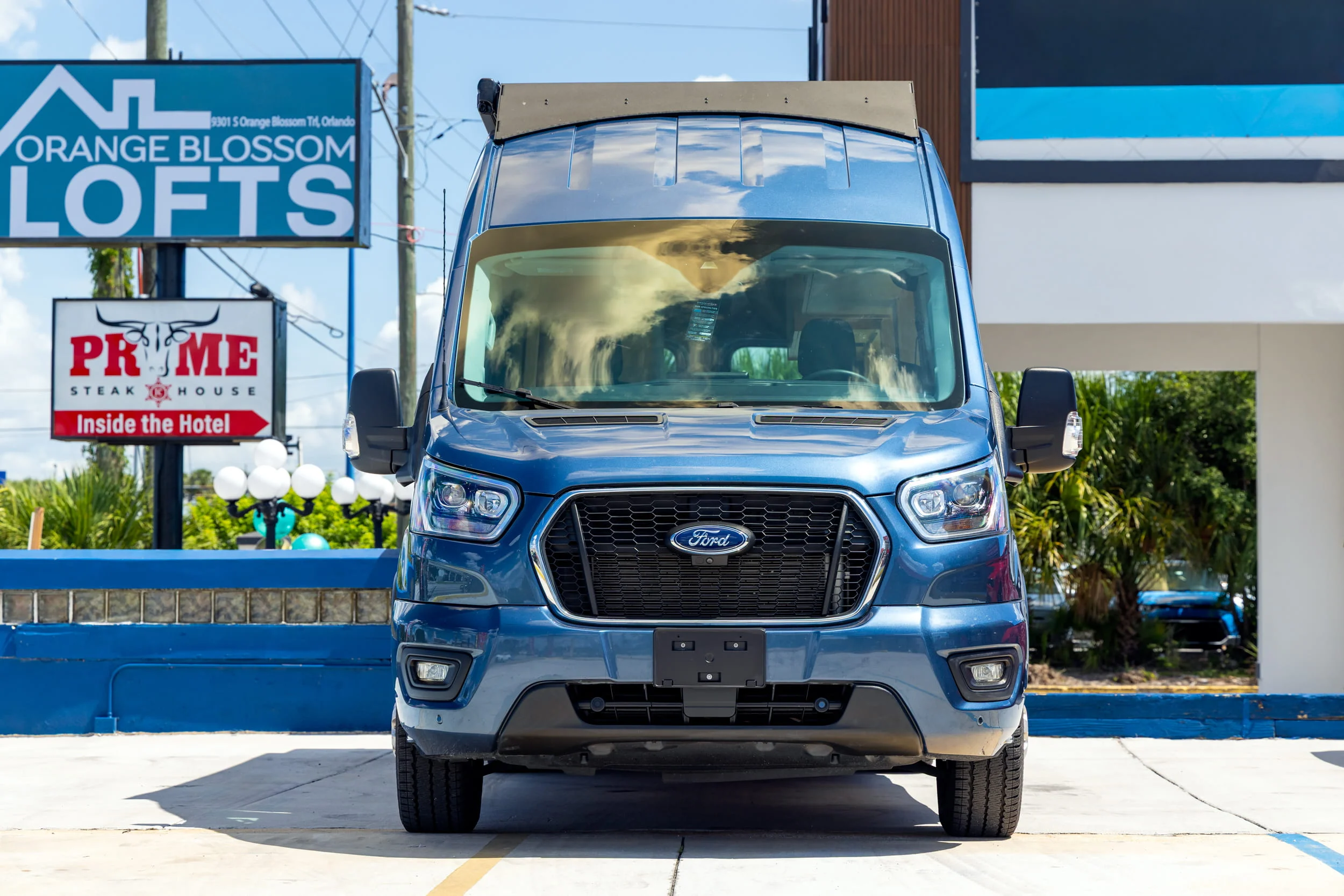
The front windshield is one of, if not the largest piece of glass on most vehicles, making it a major source of solar heat. Installing a light, high-performance film like 3M Crystalline can help reduce the intensity of solar heat on your face, arms and dashboard while maintaining a nearly factory appearance.
Clear windshield tint can also block up to 99.9% of harmful UV radiation, depending on the film type. Added UV protection can help protect against skin cancer and also slow fading and deterioration of dashboards, leather, upholstery and interior trim.
It is important to remember that no automotive film will keep a parked vehicle completely cool in the Florida sun after it has sat outside all day.
In Florida, it is illegal to have window tint installed on the full front windshield. A medical exemption can be obtained for people with qualifying medical conditions which will allow for darker tint to be installed on their vehicles.
Florida Statutes Chapter 316.2952 states the following when it comes to tinting the front windshield on motor vehicles:
“(b) Sunscreening material along a strip at the top of the windshield, so long as such material is transparent and does not encroach upon the driver’s direct forward viewing area as more particularly described and defined in Federal Motor Vehicle Safety Standards No. 205 as the AS/1 portion of the windshield.”
Please note that we are not legal experts, and nothing on our website is to be taken as legal advice. We recommend that everyone follow all local laws and regulations.
Choose the Right 3M Film for Your Vehicle
Clear window tint can absolutely reject heat, but film quality and technology matter far more than darkness alone.
Pro Tint of Orlando is Central Florida’s most-awarded 3M Pro Shop Dealer. We’re Orlando’s only authorized installers of premium 3M automotive window films like 3M Crystalline and 3M Ceramic IR.
We install computer-cut window tint that perfectly matches the specifications of your auto glass. All films are backed by 3M’s nationwide lifetime warranty as well.
At Pro Tint of Orlando, our automotive window tinting services are performed on a walk-in basis. No appointments required.
Visit one of our three Central Florida locations today or call Pro Tint of Orlando at (407) 841-2123 to get started with our award-winning 3M window tinting services.
